
Last updated November 22, 2026
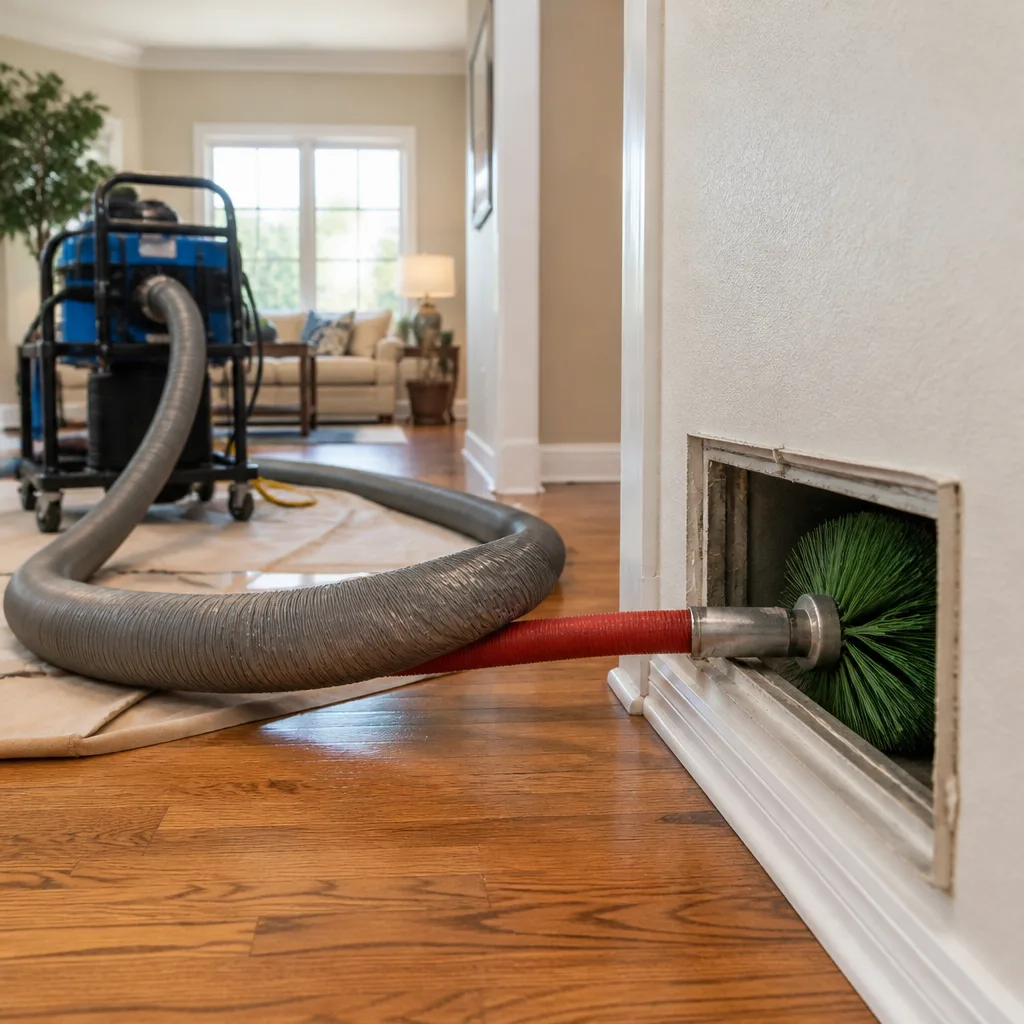 Whole-home duct cleaning
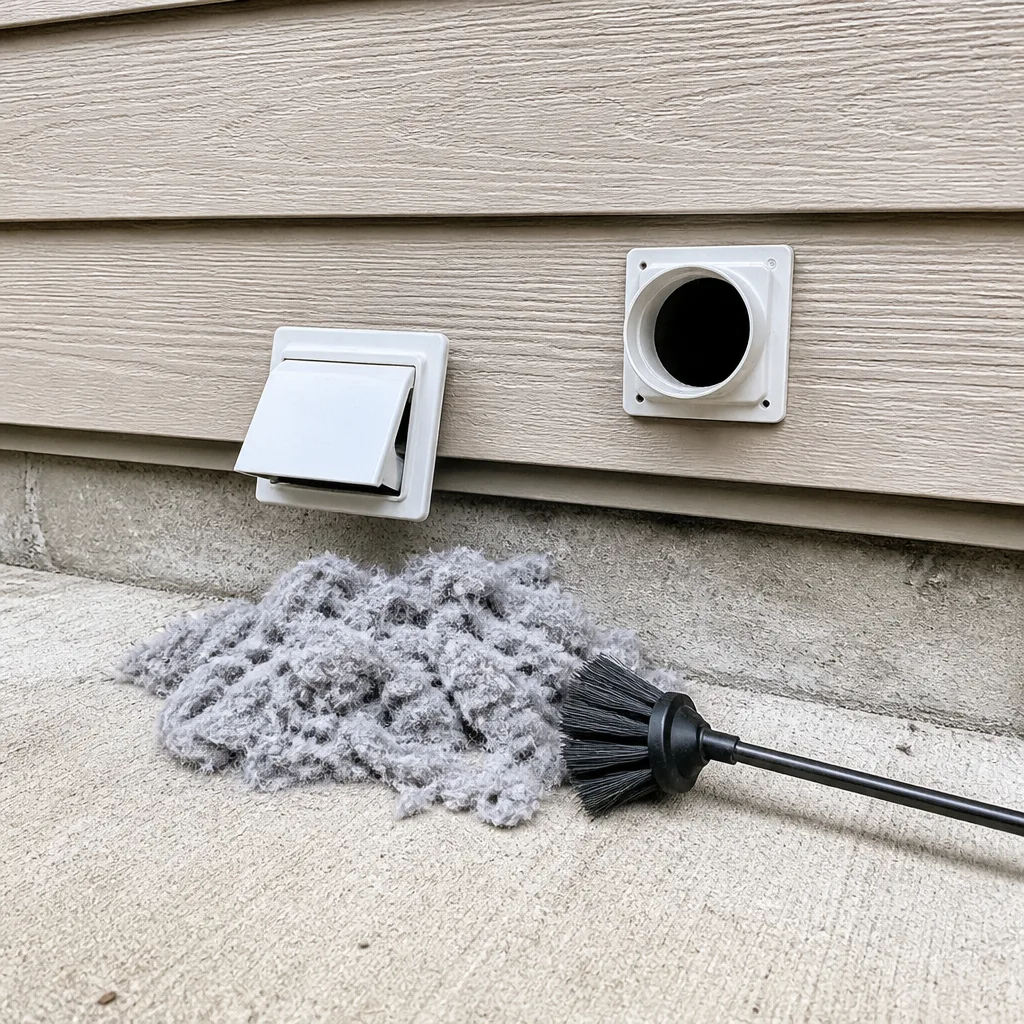 Dryer vent cleaning
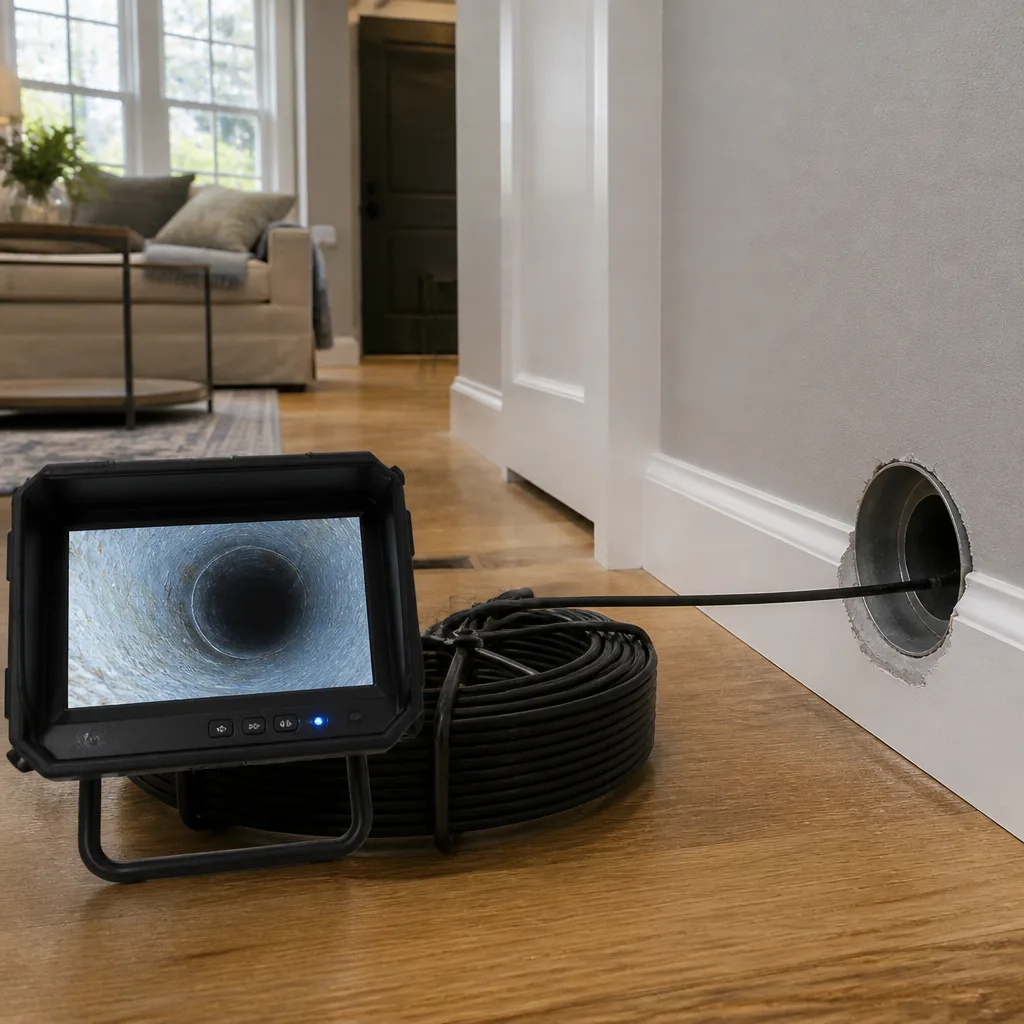 Camera inspection
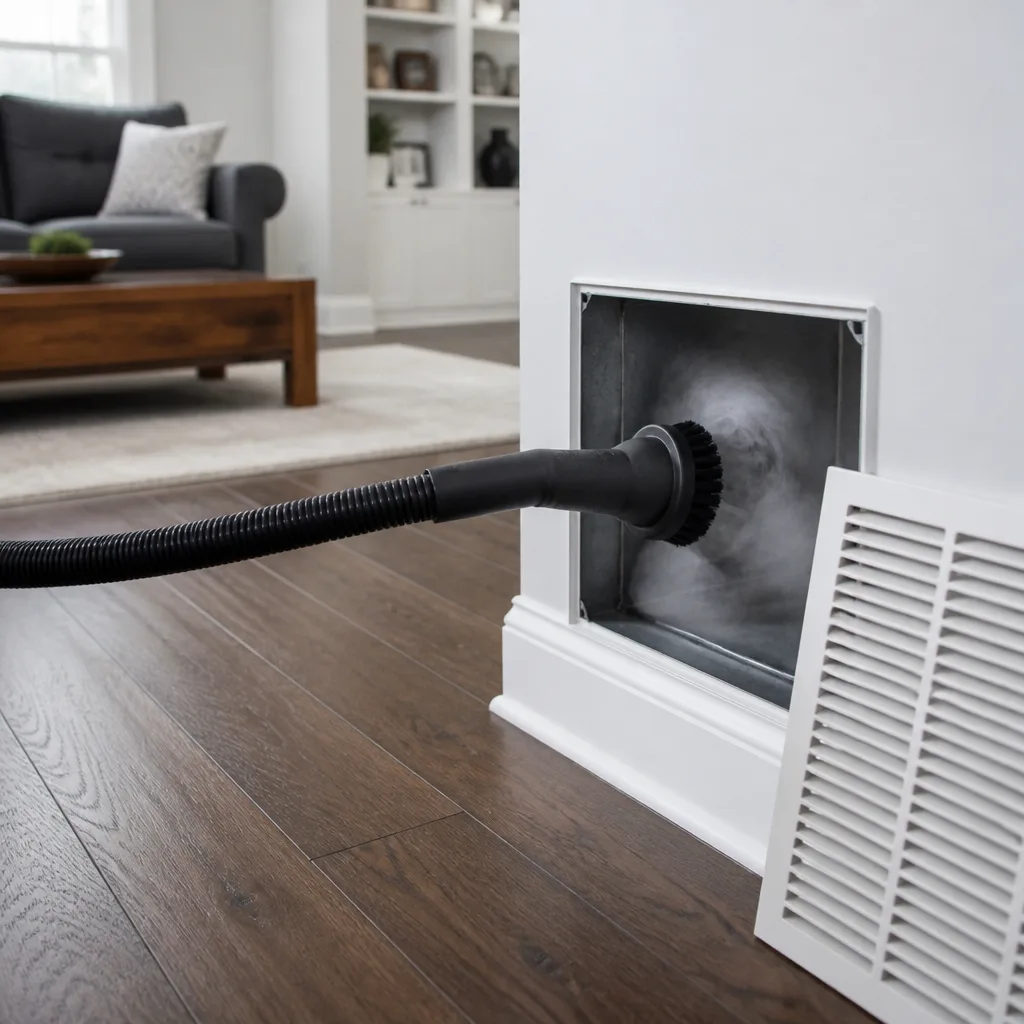 Sanitizing & deodorizing
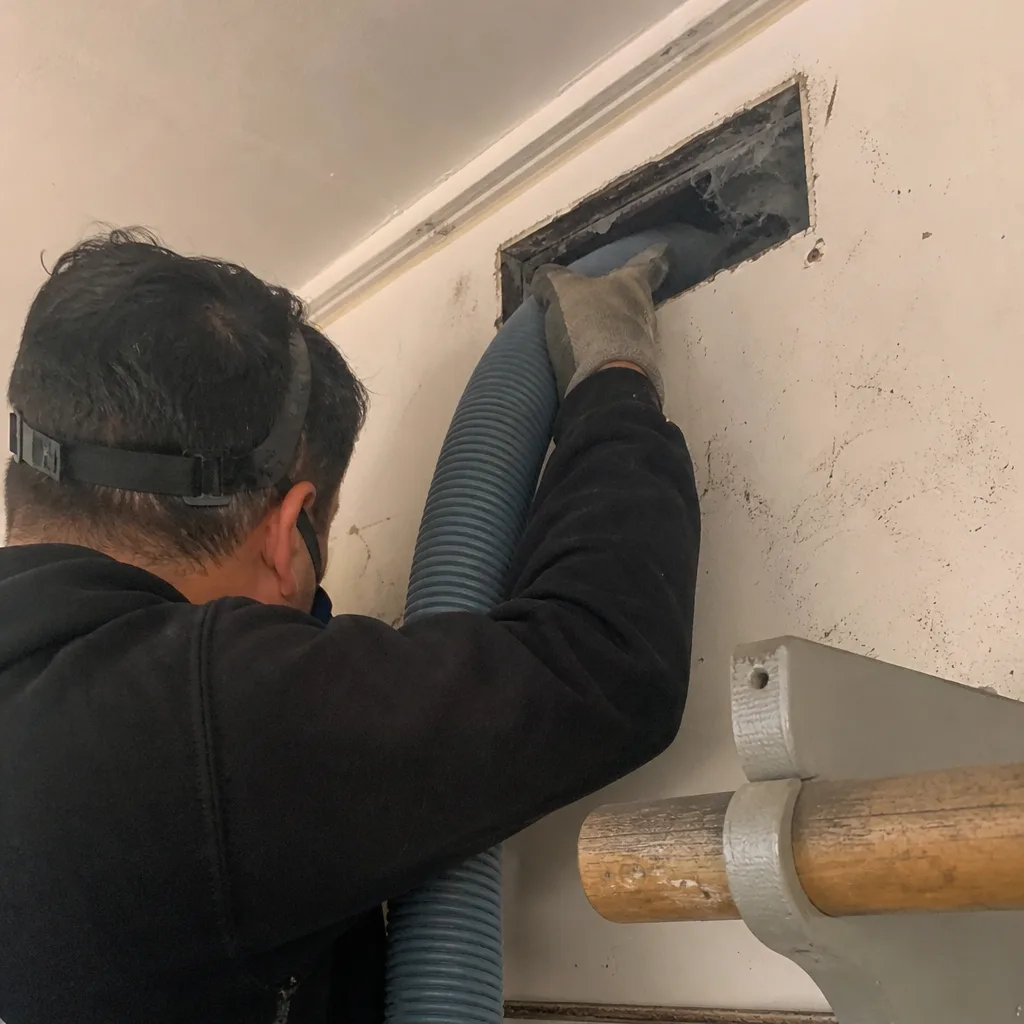
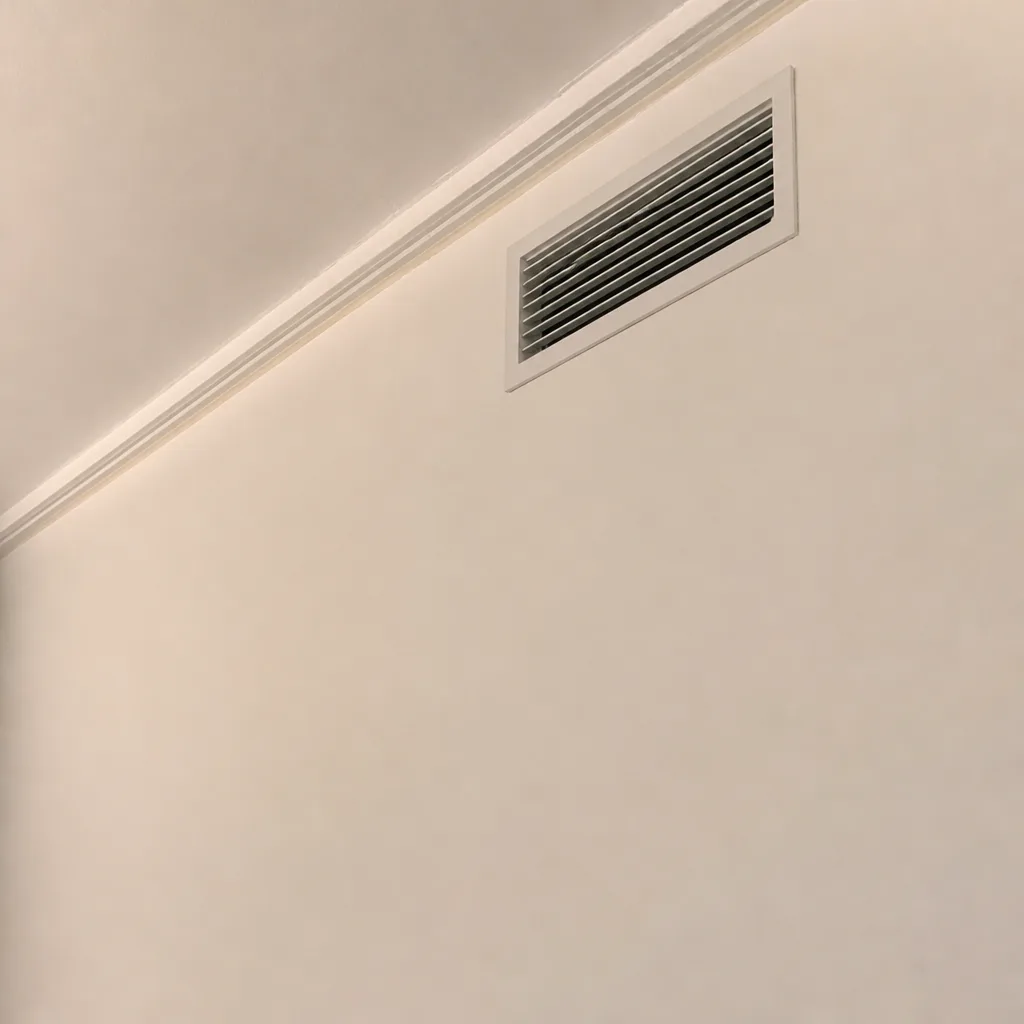
Whole-system duct and dryer vent check with before-and-after photos - you see exactly what came out of your vents
That "$99 whole-house special" is a bait ad - the real number appears once they are in your hallway, or the "clean" is a shop-vac at the register. We photograph the inside of your ducts before and after instead.
The Complete Guide to Air Duct Cleaning in Corona
A single duct cleaning that skips the air handler coil and the blower wheel can redistribute more particulate than it removes. Most homeowners never hear that from the company that quoted them a low number over the phone. The vent covers get vacuumed, the visible dust disappears, and the system keeps pushing the same fine debris through every room. This guide treats the duct system for what it is: a circulatory network that runs from the return grille through the plenum, past the coil and blower, and out to every supply register in the house. You’ll learn how Corona’s housing stock shapes contamination, how professional source removal actually works, and how to read a post-cleaning report well enough to know the job was done.
Quick Answer
Air duct cleaning in Corona means removing accumulated dust, debris, and biological growth from the entire HVAC system – supply ducts, return ducts, plenum, air handler, coil, and blower wheel – using negative-pressure containment and mechanical agitation, not compressed air. A complete job follows NADCA ACR assessment and cleaning standards and ends with visual documentation. Cleaning only the visible vents and leaving the coil and blower untouched is not a completed cleaning, and it’s why some homes feel no different afterward.
Styles & brands we work with
- Whole-home duct cleaning
- Dryer vent cleaning
- Camera inspection
- Sanitizing & deodorizing
Table of Contents
- Why Corona’s Housing Stock Creates Specific Contamination Profiles
- The Duct System, Component by Component
- How Negative-Pressure Source Removal Actually Works
- NADCA ACR Standards and What They Set
- How to Read a Post-Cleaning Report
- Turning Duct Cleaning Into Proactive Maintenance
- Dryer Vent Cleaning as Fire Safety, Not Airflow
- What Air Duct Cleaning Costs and Why Quotes Vary
Why Corona’s Housing Stock Creates Specific Contamination Profiles
Corona is not a subdivision built in one decade with one construction standard. The neighborhood runs from attached wood-frame homes to brick apartment buildings to mixed-use blocks, and much of the housing stock predates 1980. That age matters in ways a generic duct cleaning page won’t tell you. Older corona homes were often built with ductwork that has been modified, extended, or rerouted by successive owners, and each alteration leaves seams, gaps, and transitions that leak. The system that was balanced when it went in is rarely the system running today.
Density compounds the problem. Corona’s attached housing and tighter lot lines mean return air is pulled from rooms that share walls with neighboring units, and outdoor air enters through gaps that a suburban house on a half-acre might never have. Street-level particulate from the dense urban environment settles on exterior surfaces and gets drawn in. Add the humidity swings of a Queens summer and the dry heat of winter, and you get cycles of condensation and drying inside the ducts that create conditions for dust to bind to duct walls instead of moving through.
What that means practically:
- Pre-1980 homes frequently have unsealed or poorly sealed duct joints that let contaminated air enter after the filter
- Original ductwork in older corona buildings may be undersized for modern HVAC equipment added later
- Attached housing shares air pathways that make return-side leaks a whole-building issue, not a one-unit issue
- Basement and crawlspace systems in the neighborhood often draw from damp spaces, feeding moisture into the airstream
- Renovation dust from the remodeling that’s common across Corona accumulates in returns that were never protected during the work
The point is not that every old house needs duct cleaning tomorrow. It’s that a contamination profile built up over decades in a dense, mixed-age neighborhood doesn’t get solved by a quick vacuum of the register boots. It gets solved by assessing the whole system, which is where air duct cleaning starts when it’s done properly.
The Duct System, Component by Component
Think of the duct system the way you’d think of circulation. Air leaves the air handler, travels through the supply plenum and trunk, branches into runs, and exits at each register. Return air comes back through return grilles, into the return plenum, and through the filter to the blower. Contamination collects at different rates in each segment, and skipping any one of them leaves the system out of balance. Here’s what each component does and what happens when it’s neglected.
Supply Ducts
Supply runs carry conditioned air from the plenum to the registers. Because the air here is pressurized and moving, dust tends to deposit at transitions, elbows, and where the run meets the boot. Loose joints in supply runs lose conditioned air into walls and attics, which is where the EPA’s estimate of 20-30% energy loss in a typical home HVAC system comes from. Cleaning supply runs without sealing them means the deposits return faster.
Return Ducts
Returns run under negative pressure relative to the rooms they serve, so any gap in a return duct pulls unfiltered air – from a crawlspace, a wall cavity, an attic – straight into the system downstream of the filter. In Corona’s older attached housing, return-side leaks are often the single biggest source of ongoing contamination. A thorough cleaning has to include return runs and treat sealing as part of the job.
The Plenum
The supply and return plenums are the transition boxes between the air handler and the ductwork. They collect a disproportionate share of debris because air velocity drops and particles settle. The plenum is also where poor sheet-metal connections show up. Cleaning that stops at the ductwork and leaves the plenum untouched misses one of the highest-deposit areas in the system.
The Air Handler and Blower Wheel
The blower wheel is the fan that moves every cubic foot of air in the house. Dust sticks to the blades, and a fouled wheel loses efficiency and throws off balance, which shows up as vibration and noise. Here’s the part discount operators skip: a blower full of dust redistributes particulate into the airstream on every cycle. Clean the ducts and leave the wheel, and you’ve moved the contamination rather than removed it.
The Coil
The evaporator coil is a dense fin-and-tube assembly that condensates moisture in cooling season. Dust that reaches the coil sticks to wet fins and, over time, forms a mat that blocks airflow and insulates the coil from the air it’s supposed to cool. A blocked coil makes the system run longer and work harder. Coil cleaning is a different task from duct cleaning, and a complete job includes it.
The Registers and Grilles
Registers and return grilles are the visible end of the system and the easiest to clean, which is why they’re also the easiest to fake. Wiping the faces and vacuuming the boots removes a small fraction of the contamination that lives upstream. The registers are the last thing cleaned, not the whole job.
How Negative-Pressure Source Removal Actually Works
The two methods most homeowners get quoted differ mechanically, not just in price. One agitates and extracts with controlled vacuum; the other blows loose debris into the air and hopes it filters out. Knowing the difference is how you tell a real cleaning from a cosmetic one.
Source removal with negative pressure
This is the method NADCA standards describe, and it’s what professional-grade systems are built to do. A high-volume vacuum establishes negative pressure in the duct system – meaning the ducts are under suction relative to the rooms – so when debris is dislodged, it’s carried toward the vacuum rather than into the living space. Mechanical agitation then loosens the deposits that airflow alone won’t move. The corona connection here is practical: in a dense, attached neighborhood, releasing dust into the air isn’t just a nuisance, it drifts into shared spaces. Negative-pressure containment is what keeps the work inside the ducts.
The equipment matters. Rotobrush contact-vacuum systems use a rotating brush head inside the duct connected to a vacuum, so the brush physically scrubs the duct wall and the vacuum pulls what it loosens. Nikro negative-air machines provide the containment side. These are the same class of tools commercial and restoration contractors use, not the low-powered shop vacuums and flexible hoses that show up in lowball quotes.
Compressed-air blow-out
The cheap alternative uses compressed air to blast debris off the duct walls. Debris that’s loosened this way goes into the airstream and settles downstream, in the air handler, or into rooms. There’s no containment and no extraction. It looks like work happened because dust comes out of the registers, but it’s redistribution, not removal. If a quote is dramatically below the rest, this is usually why.
How a professional source-removal job typically runs
- Assess the system and document the condition of ducts, plenum, coil, and air handler before any cleaning starts
- Protect the interior with floor coverings and set up negative-pressure containment at the air handler and at each cleaning access point
- Open access holes where the system design doesn’t provide them, then seal them after cleaning
- Agitate each duct run with a contact-vacuum brush system while the vacuum pulls debris toward containment
- Clean the air handler, blower wheel, and coil as separate steps, not as part of the duct pass
- Clean and reseat registers and grilles
- Document the completed work with before-and-after photos and a written summary of findings
That’s what HVAC cleaning covers when it’s scoped as a full-system job rather than a duct-only visit. The difference between that sequence and a two-hour blast-through is where virtually all of the health and efficiency value sits.
NADCA ACR Standards and What They Set
NADCA’s ACR (Assessment, Cleaning, and Restoration) standard is the industry document that defines what a completed duct cleaning looks like. It exists for a simple reason: without a standard, “cleaned” means whatever the contractor who did the work says it means. ACR sets a floor by requiring assessment first, cleaning by defined methods, and verification that the work was done. Homeowners who understand ACR have a way to hold a quote accountable.
What the ACR framework requires in practice:
- Assessment before cleaning – the system is inspected and its condition documented before work starts, not after
- Source removal methods – cleaning uses mechanical agitation and negative pressure, not chemical treatment alone or blow-out
- Containment – debris is captured and removed, not released into occupied space
- Component coverage – the air handler, coil, and plenum are part of the scope, not optional add-ons
- Post-cleaning verification – the completed work is documented and the system is left in a condition that matches the cleaning method
NADCA also publishes that unless a source of contamination is found during assessment – things like visible biological growth, pest activity, or debris from renovation – the system may not need cleaning just because it’s been a few years. That’s the reactive-versus-proactive tension this whole guide builds on. The point of ACR isn’t to sell a cleaning on a schedule; it’s to make the cleaning you do buy measurable against a standard. A quote that doesn’t mention assessment or verification is a quote asking you to take the result on faith.
How to Read a Post-Cleaning Report
A post-cleaning report is the difference between a contractor telling you the work happened and you being able to confirm it. Most homeowners never see one, which is exactly the gap bait-and-switch operators rely on. Here’s what credible documentation includes, and how to read it.
What a post-cleaning report should include
- Pre-cleaning assessment notes – what the system looked like before work started, including which components were found contaminated
- Before-and-after photos – photographs of the customer’s own ducts, coil, and blower, not stock images of a clean system
- A list of components cleaned – supply, return, plenum, air handler, coil, blower wheel, registers, and any access points opened and resealed
- Findings that need follow-up – disconnected ducts, leaks, damaged components, or signs of biological growth or pest activity
- Verification statement – a written acknowledgment that work follows NADCA ACR methods
The photo set is the part to check most carefully. Ask to see the before photos and compare them against the after images from the same location, and ask whether the photos show your system. In Corona’s older housing, photos of the air handler and coil matter most, because those are the components most often skipped and hardest for a homeowner to inspect afterward.
What a report won’t tell you
A post-cleaning report documents condition, it doesn’t measure air quality. If a contractor hands you a report promising specific reductions in allergens or airborne particulate, treat that as marketing, not documentation. What you can rely on is the visual record of components actually cleaned, the identified issues that need follow-up, and a written scope that matches what you were quoted.
Turning Duct Cleaning Into Proactive Maintenance
Almost every duct cleaning in Corona gets booked reactively – after a smell, after a bout of sneezing and congestion, after a complaint from a tenant. That’s backwards. Reactive cleaning means the contamination already reached the point where it registered, and it means you’re paying for a corrective job instead of a preventive one. The proactive version looks different, and it starts with how you think about triggers.
The reactive signals homeowners and property managers usually describe:
- A musty or dusty odor that returns shortly after a filter change
- Visible dust at the return grille or dust settling quickly on surfaces after cleaning
- Symptoms that improve when a room’s system is off and worsen when it runs
- A filter that loads with dark, sticky debris within weeks
- A blower or coil that was never cleaned when the ductwork was last serviced
The proactive approach schedules cleaning around system events rather than symptoms: after a renovation that produced dust, after buying a home of unknown service history, before a major remodel that will run dust through the system, or when a combustion appliance or dryer vent is serviced for safety. Corona’s density means dust in neighboring units is also moving through shared pathways, so a proactive cleaning that includes sealing keeps future contamination out instead of just clearing the current load.
Duct repair and sealing is the step most duct cleaning companies skip, and it’s the one that makes proactive maintenance work at all. A cleaned and sealed system stays cleaner because return-side leaks can’t pull unfiltered air into the airstream. Without sealing, every cleaning is a temporary reset. We work with Honeywell and Aprilaire filtration and IAQ products to keep the system’s filter load in check between cleanings, and we handle sealing as part of the scope so the root cause gets fixed once.
Dryer Vent Cleaning as Fire Safety, Not Airflow
Dryer vent cleaning is a fire-safety service, not an airflow convenience. Lint is highly combustible, and lint accumulation in a dryer exhaust duct is a documented leading cause of residential fires. In Corona’s attached housing stock, where a dryer vent often runs through a shared or exterior wall, a clogged vent is a hazard beyond a single unit. Most homeowners book dryer vent cleaning because clothes take too long to dry. The better reason is the one that doesn’t show up until it’s too late.
What changes when it’s treated as safety:
- The vent line is checked for its full length, including transitions and exterior terminals where lint collects
- Flexible hose sections, which trap lint at their corrugations, get flagged as replacement candidates
- The exterior vent flap is checked to confirm it opens fully when the dryer runs
- The lint screen and behind-dryer space are included because that’s where buildup concentrates
- The vent is inspected after the cleaning pass, not just before
We treat dryer vent cleaning as its own safety scope for that reason. It’s the one service in the home where the failure mode is a fire, and it rewards being scheduled ahead of the symptom rather than after it.
What Air Duct Cleaning Costs and Why Quotes Vary
Air duct cleaning in Corona is priced per job, not per vent, and the written estimate sets the final price. What causes quotes to swing widely is scope, not quality of intention. A quote that cleans only the ductwork, skips the coil and air handler, and doesn’t include sealing is a smaller job than one that covers every component. Compare quotes on scope first, price second.
The line items that make up a full-system quote:
- System assessment and pre-cleaning documentation
- Supply and return duct cleaning with contact-vacuum agitation and negative-pressure containment
- Plenum cleaning
- Air handler and blower wheel cleaning
- Coil cleaning
- Register and grille cleaning
- Access openings cut and resealed where needed
- Post-cleaning documentation, including before-and-after photos
- Optional: duct repair and sealing, air quality and sanitizing, dryer vent cleaning
If a quote is dramatically lower than the others, find out which of those line items it’s leaving out. Nearly always it’s the coil, the air handler, or containment – which is exactly why the result feels the same a month later. We don’t position on price at Corona Air Duct Cleaning. We position on equipment and scope, because a Rotobrush contact-vacuum system and a Nikro negative-air machine cost more to run than a shop vacuum, and because a fair quote has to cover the components that actually matter.
Common Mistakes to Avoid
- Booking on price alone. A low number is a signal to ask what’s excluded, not a reason to book. The excluded component is almost always the air handler or coil, which is where contamination does its damage.
- Cleaning the ducts but skipping the coil and blower. This is the single most common failure. A fouled blower redistributes dust throughout the system, so a duct-only cleaning can leave the home breathing similar air after the visit as before it.
- Skipping the post-cleaning documentation. In Corona, where older ductwork is often hidden in walls and basements, the before-and-after photos are often the only way a homeowner can verify the work. If photos aren’t part of the job, it’s not a complete one.
- Cleaning without sealing. Cleaning a leaking return duct in a pre-1980 home without sealing the leak means unfiltered air from a wall cavity goes right back into the system. The cleaning has to address the leak to last.
- Assuming a filter change resets the clock. Filters catch what reaches them. They don’t clean deposits already on the coil, the blower wheel, or the duct walls, and those are what circulate.
- Treating dryer vent cleaning as a laundry convenience. A clogged dryer vent is a fire hazard. Schedule it as safety maintenance rather than waiting for clothes to stop drying.
- Ignoring the signs of biological growth. Musty odors and moisture in the airstream can indicate growth that a standard cleaning won’t address. That’s where remediation-level containment and air quality and sanitizing equipment like Abatement Technologies come in.
See the difference
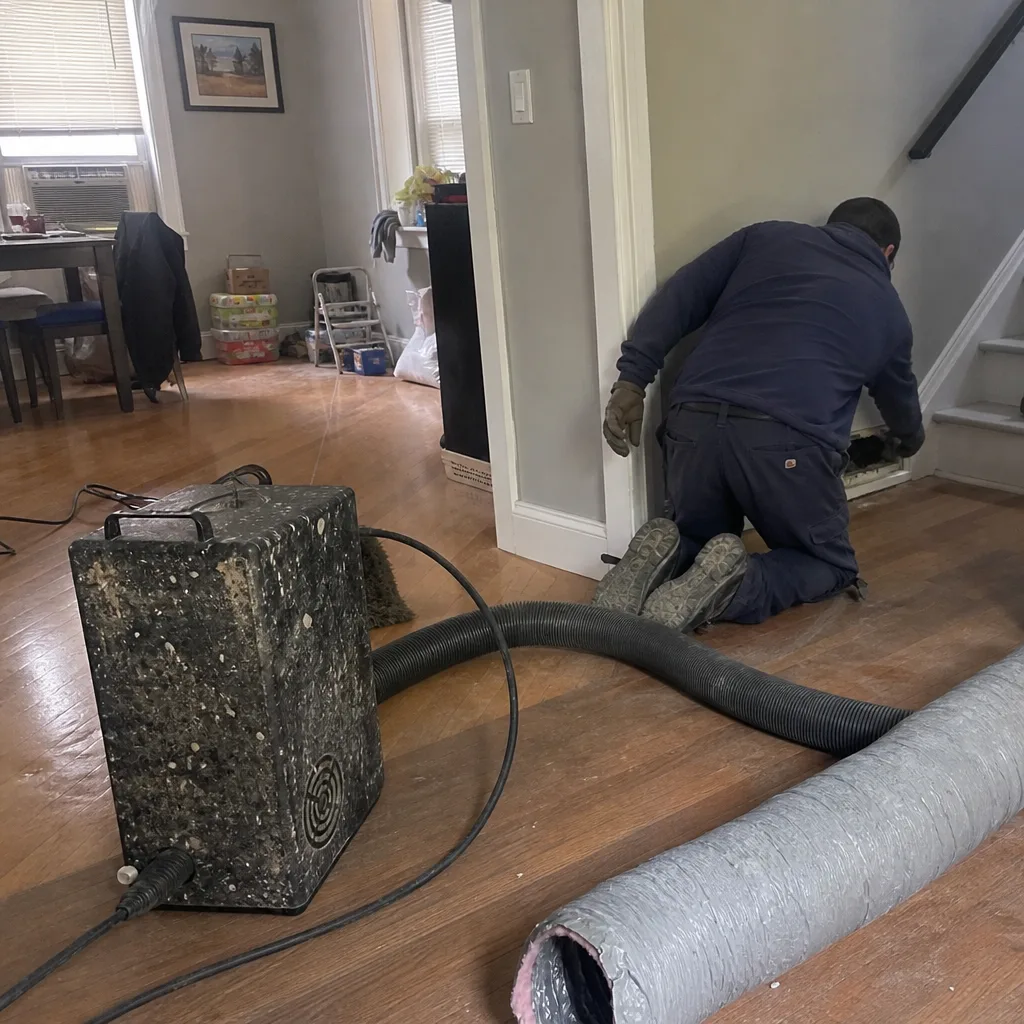 Before
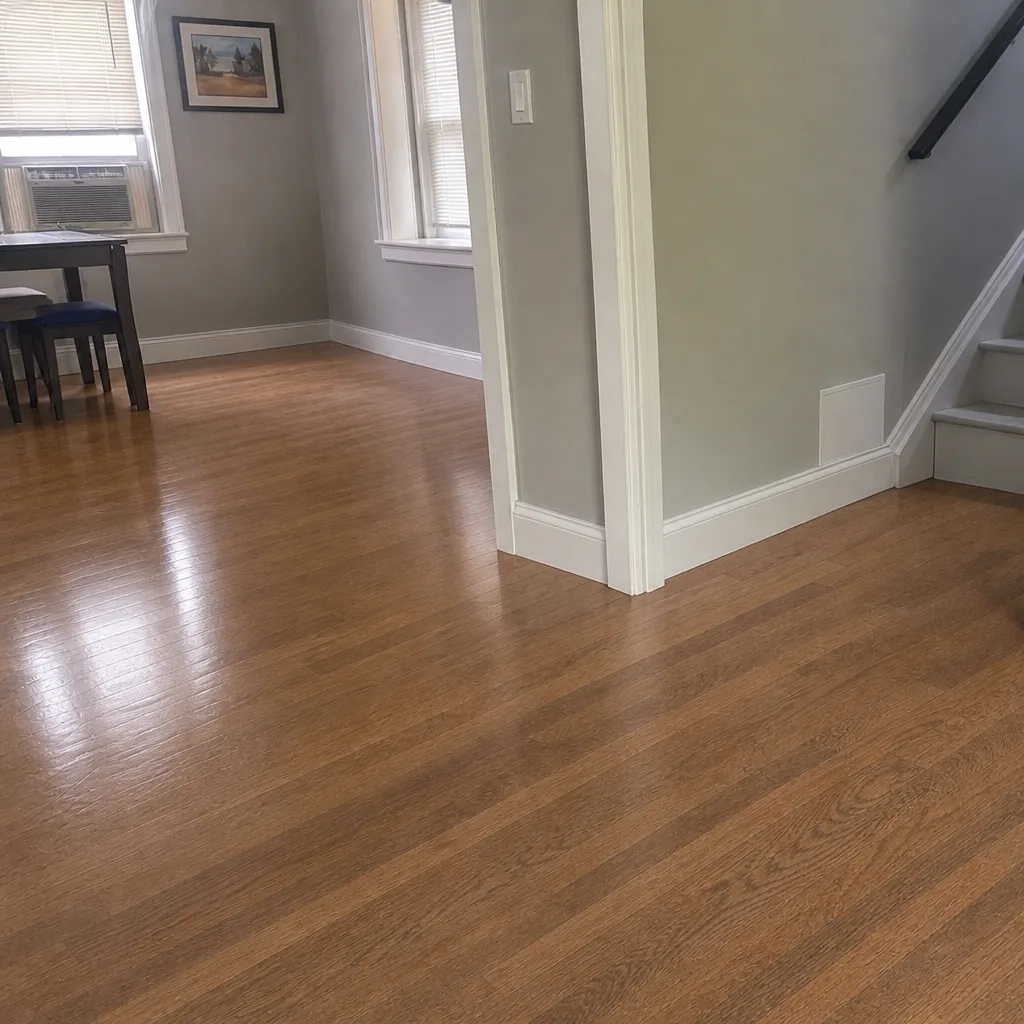 After
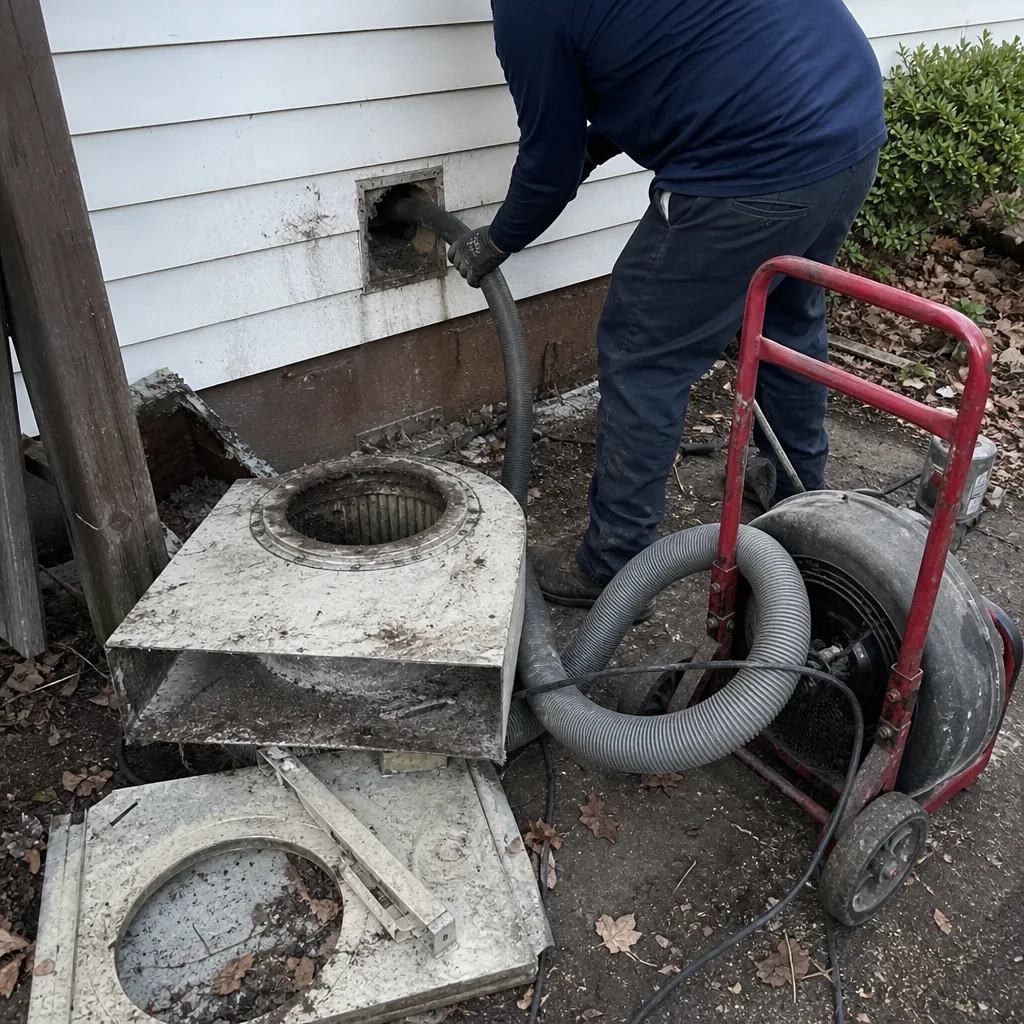 Before
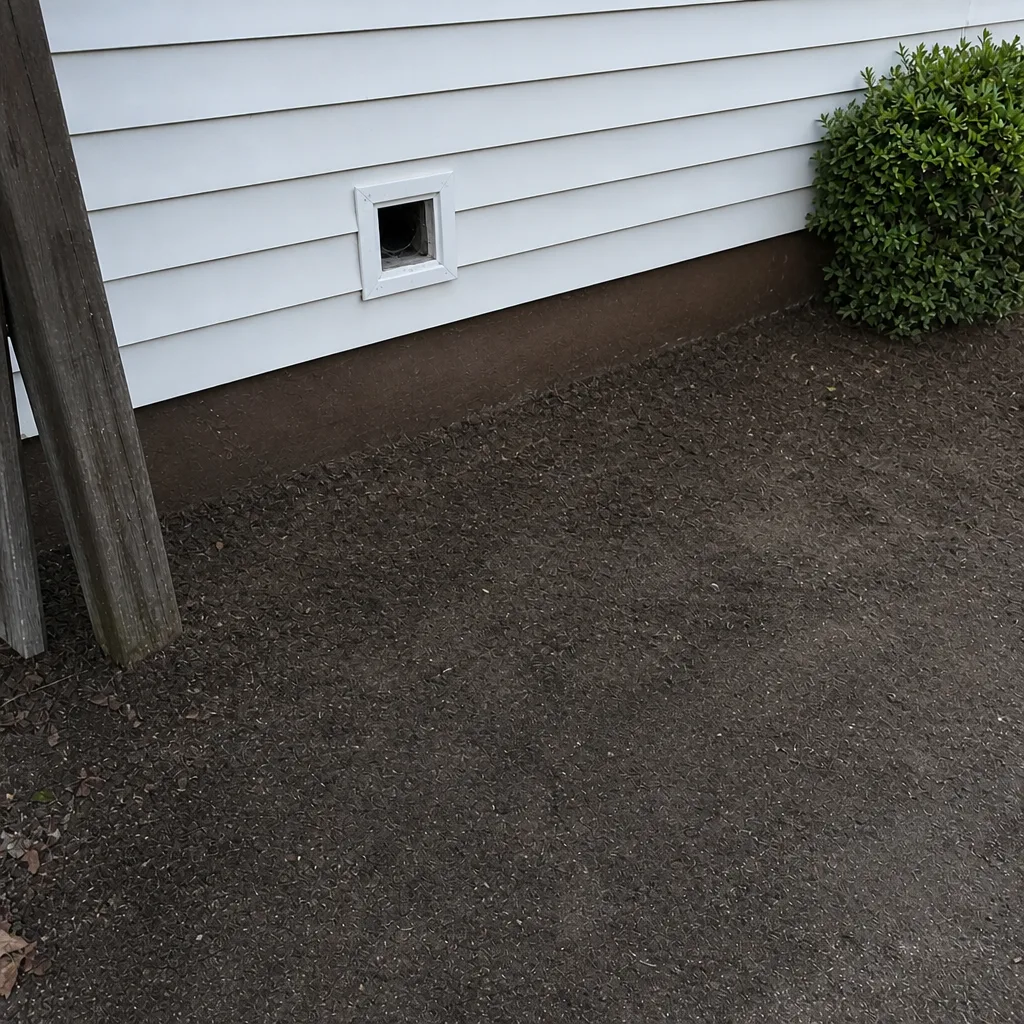 After
 Before
 After
When to Call a Professional
Call a professional when the problem is system-level rather than at the register. That means a persistent musty odor after a filter change, visible dust accumulating on surfaces faster than normal, a blower wheel or coil that’s never been cleaned and shows visible buildup, a home of unknown service history, or ductwork that’s been modified by previous owners. Corona’s older and attached housing makes each of those more likely, and the reactive signals – smell, sneezing, complaints – all point to contamination upstream of where it’s showing up. High-tension components aren’t the only thing that needs a trained set of hands. Coil cleaning, air handler work, and confined-duct access carry real risks if approached casually. Corona Air Duct Cleaning offers free estimates in Corona – call (866) 937-7810.
Frequently Asked Questions
Air duct cleaning in Corona is priced per job by written estimate, and the estimate is free. The price reflects scope: a full-system cleaning that covers supply and return ducts, plenum, air handler, blower wheel, coil, registers, and post-cleaning documentation costs more than a duct-only cleaning, and it’s the only version that addresses the whole problem. Call (866) 937-7810 for an exact quote on the system we’d be cleaning.
Cheaper quotes almost always exclude the air handler, the coil, or negative-pressure containment, and some rely on compressed-air blow-out instead of source removal. That blasts debris off the duct walls without extracting it, which is why the result doesn’t last. Ask any contractor which components they clean and whether they can show you before-and-after photos of your own system. Call (866) 937-7810 and we’ll walk through the scope line by line.
Ask for before-and-after photos of your own ducts, coil, air handler, and plenum, plus a written summary of components cleaned and any issues found. In Corona, where older ductwork often runs through walls and basements you can’t easily inspect, that documentation is the only reliable check. The team at Corona Air Duct Cleaning provides this as part of every full-system job. Call (866) 937-7810 to ask what a post-cleaning report includes.
NADCA’s guidance is that cleaning is warranted when assessment finds contamination or a source of contamination – visible biological growth, pest activity, renovation debris, or disconnected and leaking ducts. Homes in Corona’s pre-1980 housing stock often carry that contamination even without obvious symptoms, while a newer, well-sealed home may go years without needing it. The right answer is assessment first, schedule second. Call (866) 937-7810 for the estimate.
Contact-vacuum systems that mechanically scrub the duct wall while extracting debris, combined with negative-air machines that keep the ducts under containment, are what separate a real cleaning from a surface one. We use Rotobrush and Nikro equipment for that reason, and we carry Honeywell and Aprilaire filtration products for the IAQ side. Abatement Technologies equipment handles the remediation-level containment when sanitizing is needed. Call (866) 937-7810 with questions about scope before you book.
It can reduce the particulate load circulating through the home, which is why a complete cleaning matters: one that leaves the blower wheel fouled keeps redistributing dust and can negate the benefit. We don’t promise measurable health outcomes. What we do is clean every component that contributes to the airstream and document it. Call (866) 937-7810 to talk through what your system needs.
The Bottom Line
The duct system is a circulatory network, and a cleaning that stops at the register isn’t a complete one. Corona’s denser, older, attached housing stock makes contamination more likely and sealing more important than in a newer suburban home. A professional job assesses first, works from plenum to register with negative-pressure source removal, includes the air handler, blower wheel, and coil, seals the leaks that let contamination back in, and leaves behind before-and-after photos and a written report. That’s what we do at Corona Air Duct Cleaning, and it’s why the equipment – Rotobrush, Nikro, and Honeywell and Aprilaire IAQ products – matters as much as the price.
For a free estimate on a full-system cleaning, or to ask about Corona Air Duct Cleaning services, call (866) 937-7810. We answer 24/7. Fast dispatch from 7am to 7pm, Sunday through Friday.
Written by the team at Corona Air Duct Cleaning.