
Nikro Air Duct Cleaning in Corona: A Homeowner’s Guide
Most homeowners in Corona judge a duct cleaning by the noise it makes and the size of the vacuum. That misses the point. A Nikro system is judged by negative pressure, and if the technician can’t tell you what that number means, the machine in the hallway is decoration. This guide explains what Nikro equipment actually does, how it should be used in the housing types you find around Corona, and how to spot a contractor who owns the gear but skips the method. If you’d rather not sort that out yourself, call (866) 937-7810 and we’ll walk you through it.
What does a Nikro negative air machine actually do?
A Nikro negative air machine lowers the air pressure inside your duct system below the pressure in the rooms around it, so debris travels toward the machine instead of drifting into your living space. That’s the whole idea. The machine pulls air through a HEPA-filtered exhaust, capturing what it lifts rather than blowing fine dust back into the room. Pressure is measured in inches of water column, a scale most homeowners have never encountered, and a properly set up job holds the ductwork under consistent negative pressure for the length of the cleaning.
Three things have to happen for that to work:
- The system is sealed at the registers and connected to the machine at a central point, usually the main plenum or a dedicated access cut.
- The machine runs continuously, not in bursts between other tasks.
- The exhaust is filtered, so what comes out the back of the unit is cleaner than what went in.
Nikro builds portable and HEPA-filtered units used by restoration and remediation contractors, and that lineage matters. These are containment tools first and vacuums second. In a Corona rowhouse, where duct runs are short and often share wall cavities with a neighbor, containment is not a luxury. Loose debris that escapes the system has somewhere to go, and that somewhere is your kitchen.
Nikro portable systems vs. truck-mounted units: which fits Corona housing?
Truck-mounted units win on raw suction and are a fine choice for a detached single-family house with a garage and a clear hose run to the equipment. Portable Nikro systems win on access and containment. In Corona, access is usually the deciding factor.
Here’s how it shakes out by housing type:
- Attached rowhouses: Portable equipment with HEPA filtration keeps the work contained inside the unit. There’s no hose snaking through a shared entry, and no exhaust pointed at a neighbor’s window.
- High-rise and multi-unit buildings: Truck-mounted equipment is often simply not an option. Portable units go up an elevator and set up in a hallway or utility closet without a permit for street parking or a hundred feet of hose.
- Single-family homes: Either setup works. A truck-mounted unit handles long trunk runs on a larger system well, while a portable Nikro unit handles the same job with more attention to sealing.
What matters more than which machine shows up is whether the technician running it understands pressure and containment. A truck-mounted unit with no register sealing distributes debris as effectively as a shop vac. A portable Nikro system set up correctly does the job in a Corona apartment where a truck could never reach.
What should a technician be doing at each register, plenum, and return?
The machine creates the pressure. It does not scrub the duct walls. That work is manual, and it’s where the quality of an air duct cleaning job is actually decided. A Nikro unit pulling on a sealed system will remove loose dust, but adhered debris on the duct interior needs contact agitation to break it free.
Here’s the sequence we expect on a proper source-removal job in Corona:
- Set negative pressure first. Connect the machine, seal the registers, and confirm the system is under vacuum before anyone touches a brush.
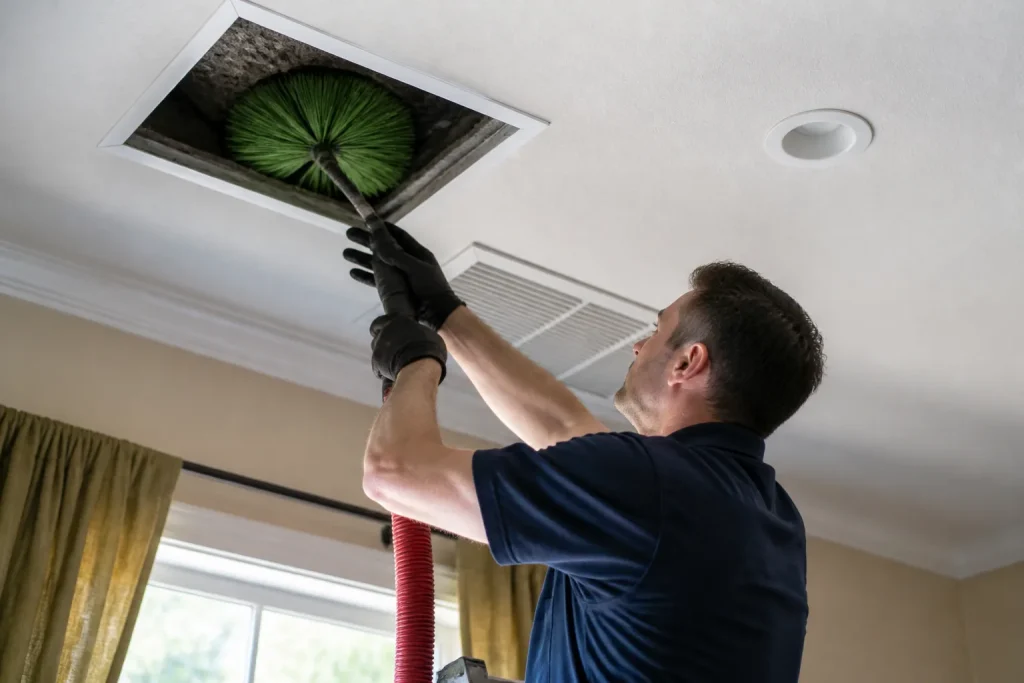
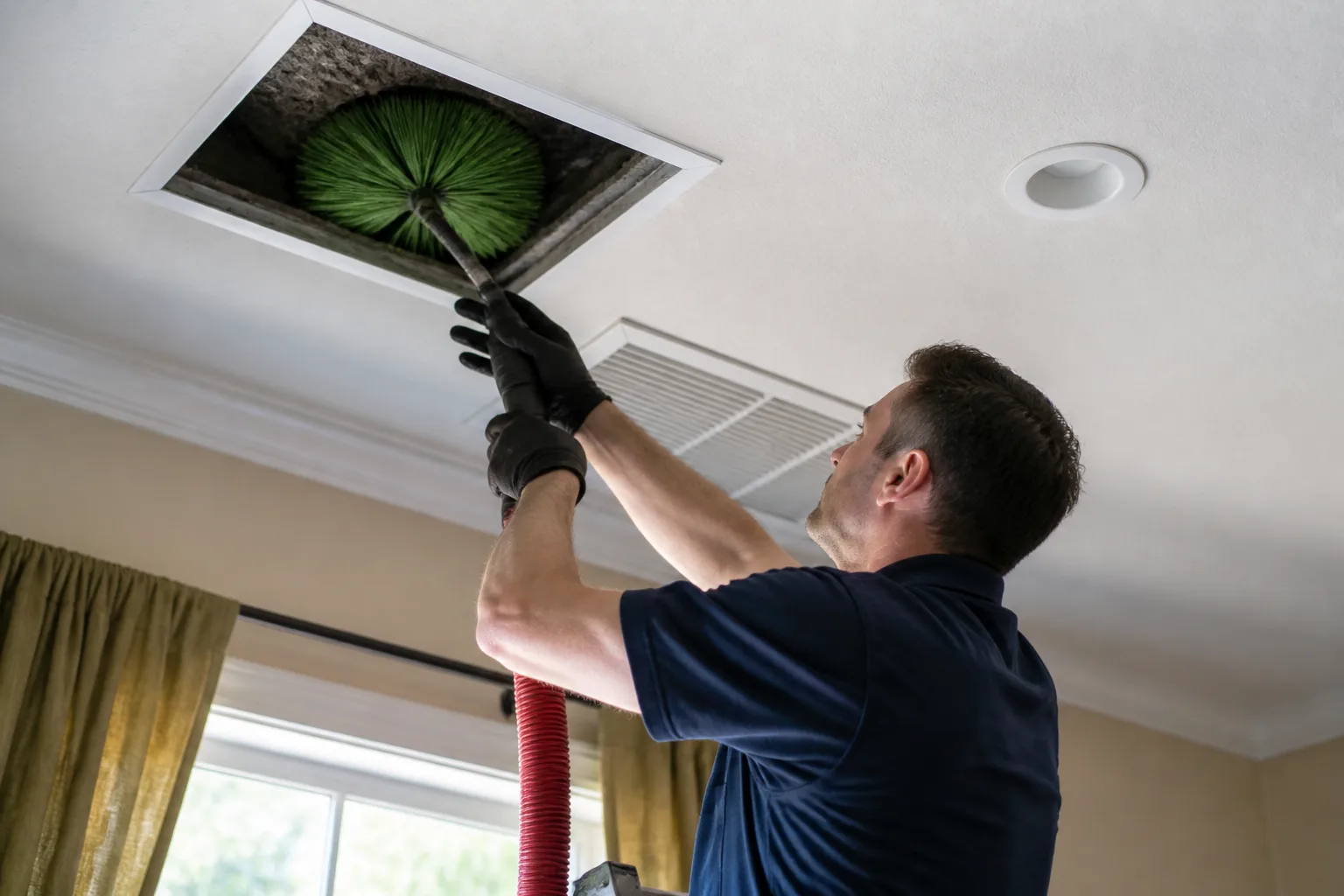
- Work each supply register. Feed an air whip or rotary brush through the register and agitate the full length of the branch run, working back toward the trunk.
- Clean the plenum and main trunk. The largest debris load usually sits here. Manual agitation plus the machine’s pull moves it to the collection point.
- Address every return. Returns carry the heaviest dust load and get skipped on cheap jobs because they’re harder to reach.
- Pull the debris out, don’t push it around. The machine runs the whole time. If it shuts off while a brush is running, debris is being redistributed.
This is the part where a crew’s habits show. The equipment brand on the side of the machine tells you nothing about whether the technician is actually agitating each branch line or just running a vacuum and calling it done.
What are the red flags that a contractor has Nikro equipment but skips the method?
Owning good equipment and using it correctly are different things. We’ve seen enough jobs in Corona to know the difference is visible from the hallway if you know what to look for. Watch for these:
- No register sealing. If supply and return vents are wide open while the vacuum runs, the system isn’t under negative pressure. Air is short-circuiting from the room into the duct and back out.
- No pressure verification. A technician working a Nikro system should be able to tell you the system is under vacuum, not just that the machine is on.
- No access work. Proper cleaning usually requires cutting access ports at the plenum or trunk. If the crew never opens the system beyond the vent covers, they’re cleaning the first six inches and nothing else.
- No before-and-after photos. The inside of a duct is not visible to you. Photos taken at the plenum and at a return are the only proof the work happened.
- Short visit times. A full-system clean on a Corona rowhouse takes real hours. A twenty-minute visit with a machine running is not a cleaning.
Ask one direct question before you book: “How do you confirm negative pressure on my system, and can I see photos of the plenum before and after?” The answer tells you more than any brochure.
How does Nikro equipment fit into a complete air quality service?
Cleaning is the middle of the job, not the whole of it. A proper sequence runs cleanup, then repair, then treatment.
After the ducts are cleaned and the machine is pulled, a technician should HEPA-vacuum any residual dust from the register boots, the furnace cabinet and the coil area. That step removes the fine material the main cleaning loosened but didn’t capture. Then comes HVAC cleaning of the air handler components themselves, because a clean duct system attached to a dirty blower is a clean duct system that will be dirty again in a season.
Sanitizing comes after cleaning, never before. Applying a sanitizer to a dusty duct seals the dust in place. Once the system is clean and dry, an application through Abatement Technologies equipment gives you the containment standard used in remediation work. From there, duct repair and sealing close the leaks that let contamination back in. That’s also where a homeowner sees real energy value, since the EPA estimates duct leakage causes 20-30% energy loss in a typical home HVAC system. For Corona homeowners, that’s a bill that shows up every month.
If you’d rather not take on the sequencing yourself, or you’re not sure your system needs the full job, call (866) 937-7810 for a free estimate.
When to call a pro
Some things are worth checking yourself. A musty smell from a supply register, visible dust streaking around a vent cover, or a dryer that takes two cycles to dry a load are all worth a closer look. But the inside of a duct system, the plenum, and the air handler are not DIY territory. Improperly sealed or agitated ductwork can release debris into living space faster than a homeowner can contain it, and dryer vent work involves lint accumulation near heat sources where the margin for error is thin. That’s a job for dryer vent cleaning by a trained professional, not a homeowner with a vacuum attachment.
If you’re seeing any of the signs above, a professional inspection is the right next step. Our technicians have up to 15 years of experience, and the local pro is licensed and insured as their state requires. The written estimate sets the price for the job, and it’s agreed before any work starts.
Related services in Corona
We handle duct cleaning, duct repair and sealing, air quality and sanitizing, HVAC cleaning, and dryer vent service. If you’re comparing quotes or want the full system assessed at once, start with our Corona Air Duct Cleaning overview. If dryer lint is your concern, our dryer vent cleaning page covers that job specifically, while the HVAC cleaning page covers the air handler side. It’s simpler to look at the whole system than to shop one service at a time.
The Bottom Line
Nikro equipment is a real marker of a source-removal contractor, but the machine alone doesn’t clean your ducts. What separates a proper job from a cosmetic one is pressure, sealing, manual agitation at every register and return, and HEPA cleanup after the fact. In Corona, where rowhouses and multi-unit buildings make access and containment the deciding factors, portable Nikro systems with HEPA filtration are usually the right tool for the job. What you should be looking for is the technician’s method, not the brand sticker on the machine.
If you’re in Corona and need help, Corona Air Duct Cleaning offers free estimates – call (866) 937-7810. We answer 24/7. Fast dispatch from 7am to 7pm, Sunday through Friday.
Frequently Asked Questions
Yes, by a wide margin. A Nikro negative air machine holds your duct system under negative pressure with HEPA-filtered exhaust, so debris is extracted and contained. A shop vac creates airflow without containment, which redistributes fine dust back into the room. The Nikro’s value depends on the technician sealing registers and verifying pressure, so ask about method before you book. Call (866) 937-7810 for an exact quote – estimates are free.
We price the job as one flat rate per system, agreed before work starts, rather than quoting a per-vent figure that grows once the technician is on site. The written estimate sets the final price, and it’s based on your system size, duct layout and access. Call (866) 937-7810 for an exact quote.
Low quotes usually skip the parts of the job that cost time: register sealing, access cuts at the plenum, manual agitation of each branch, and HEPA cleanup afterward. A cheap visit typically runs a vacuum at the main trunk with vents open, which doesn’t hold pressure and doesn’t reach the branches. Ask what’s included at each register and whether you’ll get before-and-after photos. Call (866) 937-7810 with your questions – estimates are free.
Ask for before-and-after photos of your plenum, a return, and at least one supply branch. Those are the points a proper cleaning reaches and the points a photo can actually verify. A technician working a Nikro system should also be able to confirm the system was under negative pressure for the duration of the job. If a contractor can’t show you either, that’s the answer.
Written by the team at Corona Air Duct Cleaning.
Need Air Duct Cleaning Help?
Call Corona Air Duct Cleaning - the local pro we connect you with is licensed and insured, here with fast help in Corona.
(866) 937-7810